Lego Half-Timber Farm House and Barn.
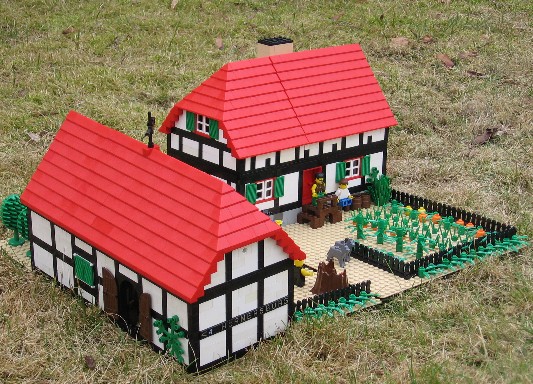
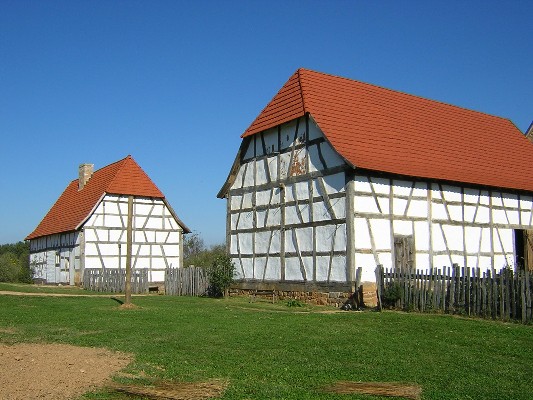
This Lego house and Lego barn are modeled after actual German buildings from the 1600s that were moved from Germany to the United States and are now located at the Frontier Culture Museum of Virginia.
Farm House
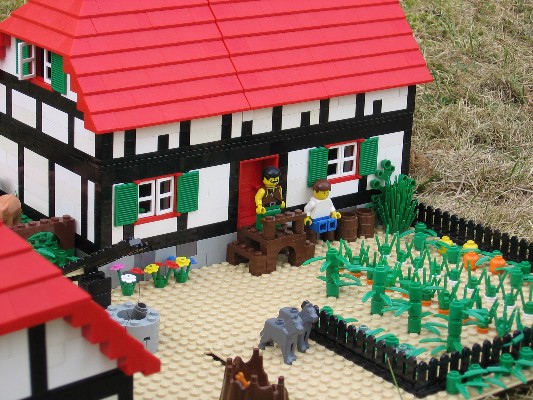
This German farm house is built using half-timber construction (fachwerk in German). First, a framework is made using large pieces of lumber. The space between the pieces of timber are filled in using interwoven pieces of wood called wattle. Next, the wattle is covered with a type of mud called daub. Finally, it is coated with whitewashed plaster. The house has a clay tile roof.
Lego Farm House Floor Plan
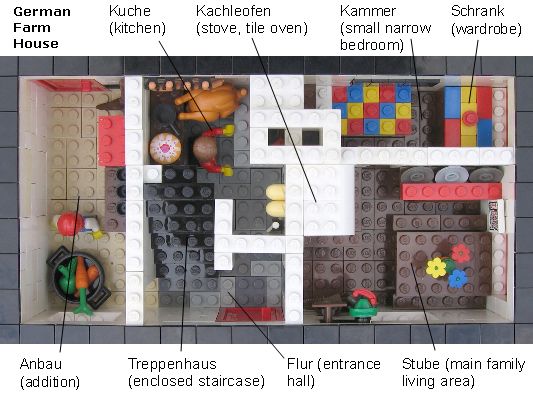
Click on the picture to see the floor plan of this Lego German farm house.
Entrance Hall
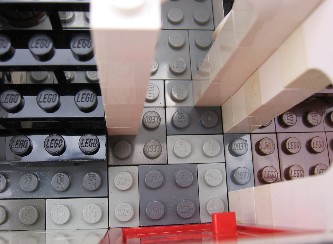
After entering the front door of the Lego house, you will find yourself in the entrance hall (flur in German). It is covered with paving stones. Directly to the right is the Family Living Area. Ahead to the right is the kitchen. Ahead to the left is an enclosed staircase (treppenhaus in German). Behind the staircase is another staircase that leads down to the root cellar, which is used for storing beets and cabbages in the winter.
Family Living Area
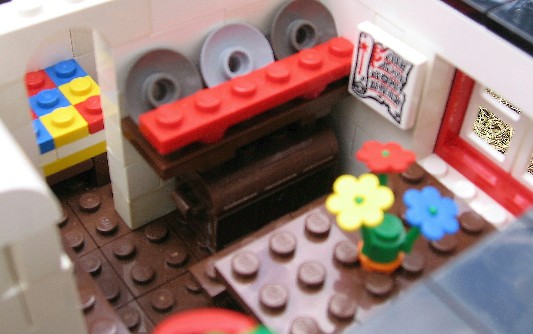
The family spends much time in this room (stube in German). On the wall, you can see some of the father’s simple weapons. The big white stove (kachleofen) in the corner helps keep the room warm. Wood is put into the stove through a little door in the kitchen. Around the stove are benches for people to sit and stay warm. This is also a great place to dry off after a rain storm. Families with more money decorate their stoves with pretty tiles. The stove in this poorer house is only covered with whitewashed daub.
Family Table
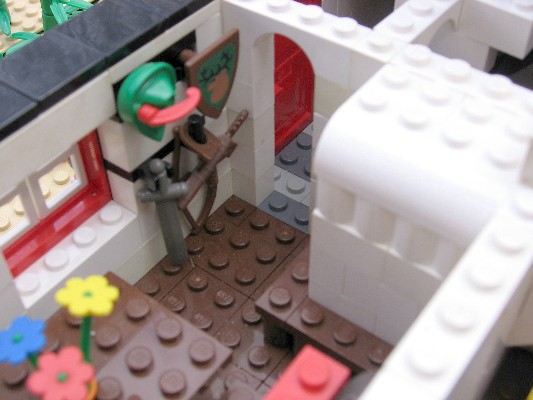
In the living area is a big wooden table that the family gathers around to eat their meals. On the wall is a prayer embroidered onto cloth.
Narrow Bedroom
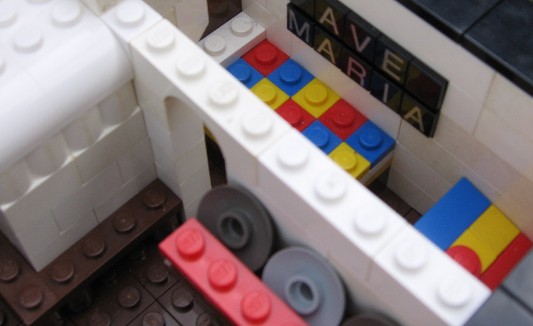
On the other side of the stube is a narrow bedroom (kammer in German) where the parents sleep. Their bed has a straw mattress.
Chest
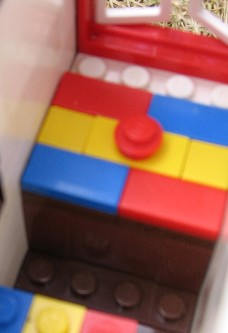
In the bedroom is a chest for storing clothes and linens. Under the chest is a secret hole for hiding valuable items.
Kitchen
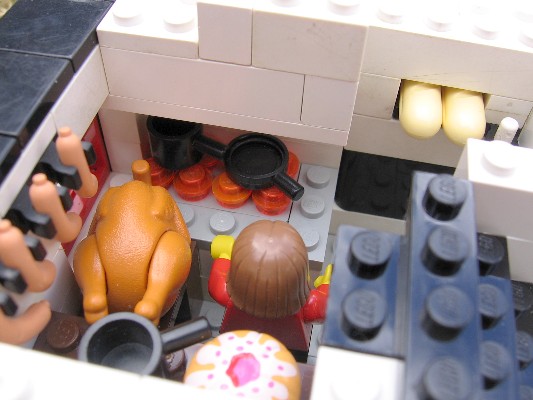
Looks like mother is preparing some tasty food for supper — sausages, bread and a big chicken (kuche in German).
Instead of a big fireplace in the kitchen for cooking food, this German farm house has a raised stone platform or hearth. This way, mother can build several little fires on it and set a kettle over each fire. The little fires do not require as much wood as one big fire would need.
Stove
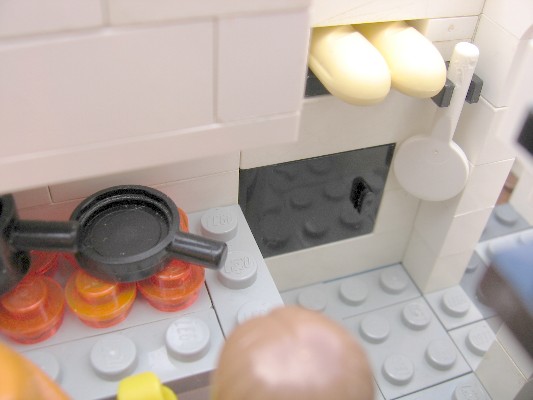
In the Living Area (stube), you saw one side of this stove (kachleofen in German). Here in the kitchen, there is a little door at the bottom of the stove for adding more wood to the fire. At the top of the stove, mother is baking some bread.
Addition
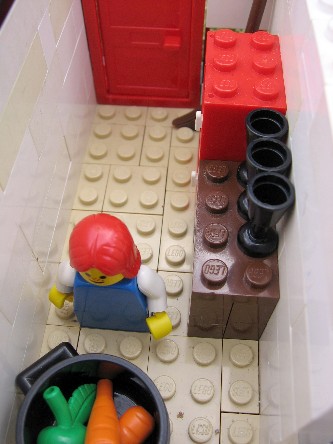
This room is an addition (anbau in German) because it was added on after the original house was built. This room provides extra space to do things like weaving, making shoes or clogs.
Upstairs
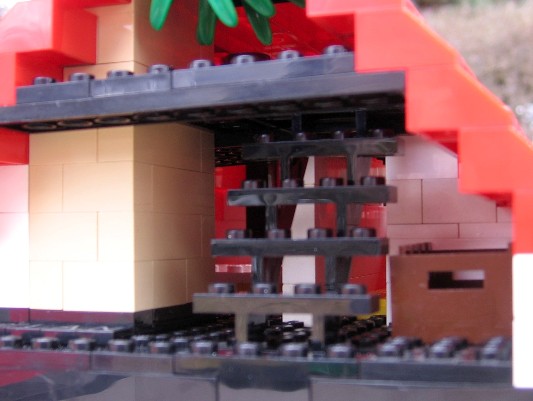
The second story of the Lego farmhouse has three bedrooms. There is another stairway leading to the third floor, which is a place for storing grain and other things. In the picture, you can see a plant hanging from the ceiling to dry.
German Village Farms
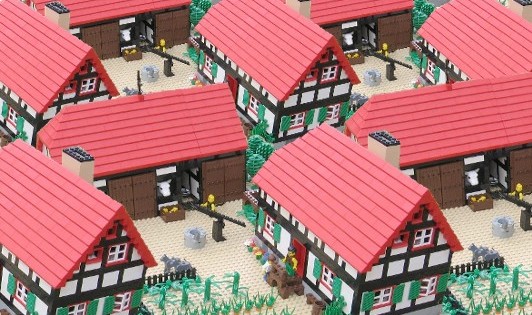
German farms were different than American farms. In America, you might see a farm house and barn in the middle of a large wheat field, perhaps miles away from the nearest farm. In Germany, families built houses and barns right next to each other in a small village.
Instead of having big expanses of land like in America, the farmer rents and tends several little patches of land scattered around the village. These patches are close enough to his house that the farmer can walk to them.
Each village also has its own church. This means that people can easily walk to Mass.
Lego Barn
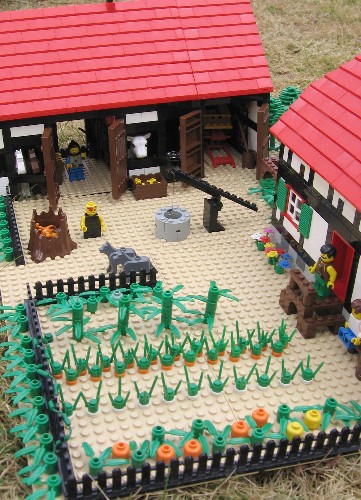
Like the house, the barn is built using half-timber construction and has a clay tile roof. The barn is built at a right-angle to the house to form a little courtyard.
Lego Barn Floor Plan
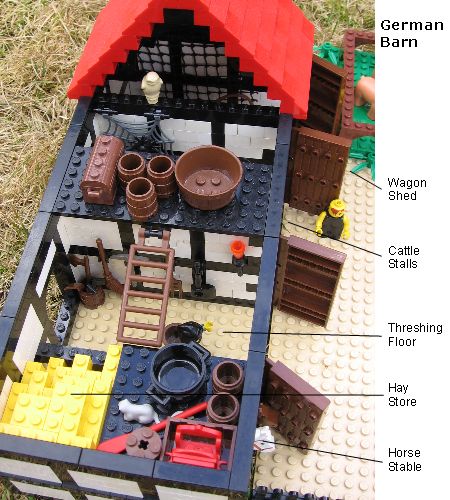
Click on this picture to view the floor plan of the Lego barn.
Horse Stable
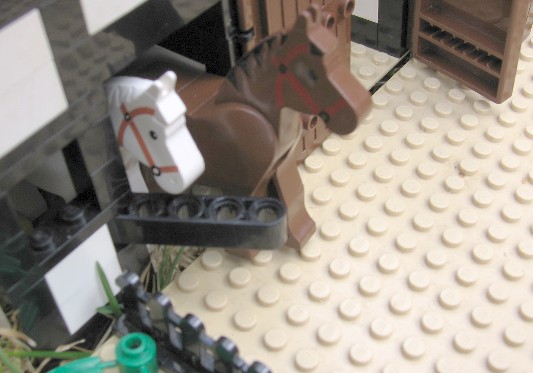
Here is where the farmer keeps his horses.
Threshing Floor
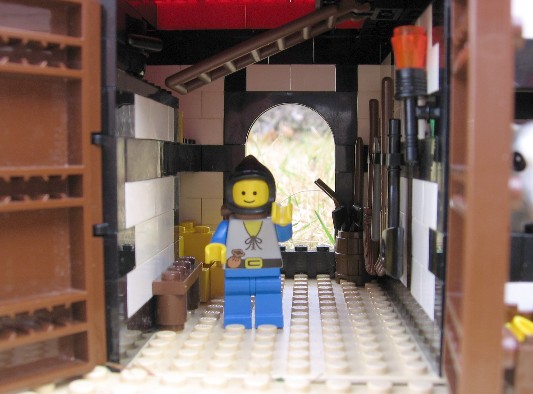
Here is a German farmer named Johann. In German, the name for a farmer or peasant is bauer. On the threshing floor, the farmer beats the seeds out of grain. He mostly grows spelt, rye, barley and oats.
Threshing Floor Loft
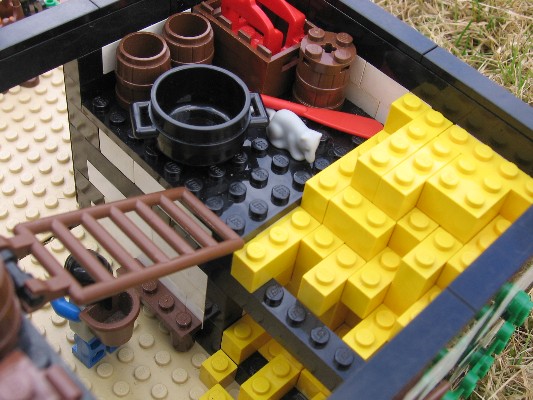
Here is a view from the loft above the threshing floor.
Hay Store
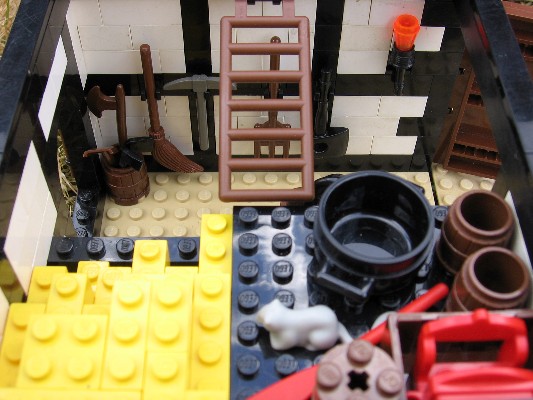
The farmer keeps a supply of hay for the horses to eat.
Storage
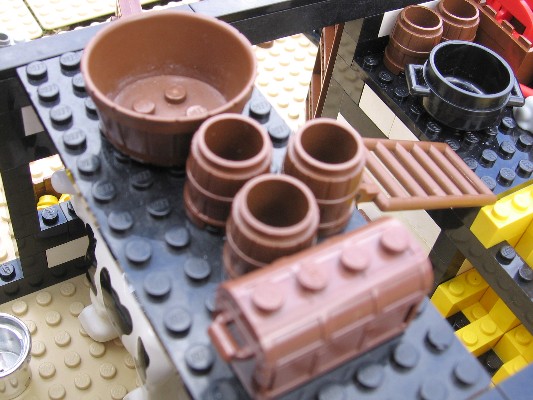
Above the barn floor is a great place for storing things.
Cattle Stall
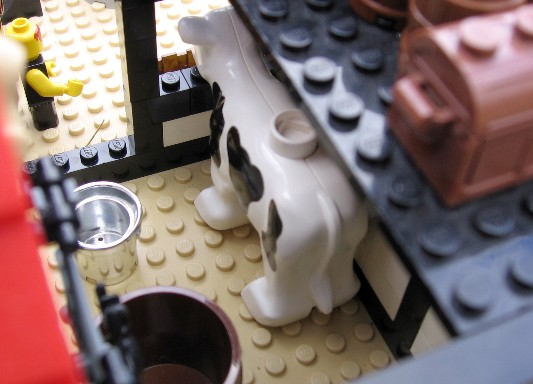
This stall is where the farmer keeps his cows. German farms do not have many large animals because they require lots of room and lots of food.
Edelweiss the Cow
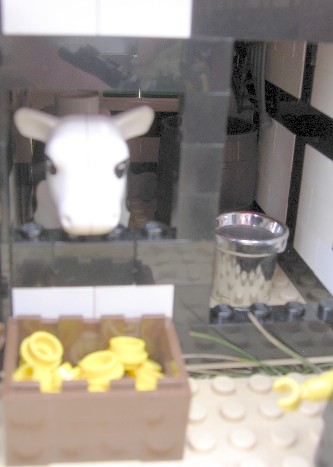
This cow is named Edelweiss. She provides milk for the family.
Wagon Shed
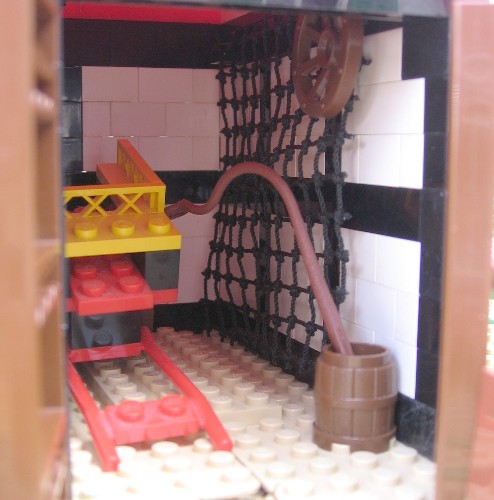
This is where the farmer keeps his wagon and some other equipment.
Courtyard
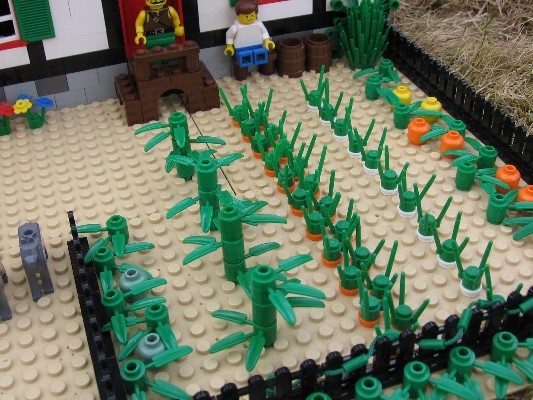
In front of the Lego house and Lego barn is a small courtyard. The family has a little garden where they grow their own onions, peas, lentils and cabbage. Mother soaks shredded cabbage in large stoneware pots to make sauerkraut.
Well
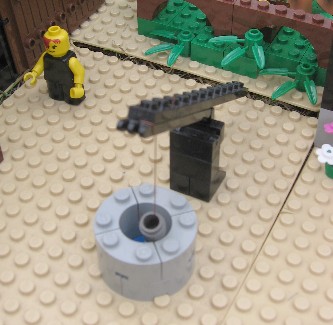
In the courtyard is a well. The bucket is lowered down into the well to get fresh water.
Smoked Drumsticks
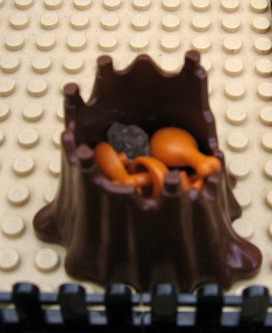
This is an old stump where the farmer is smoking some drumsticks.
Fruit Trees
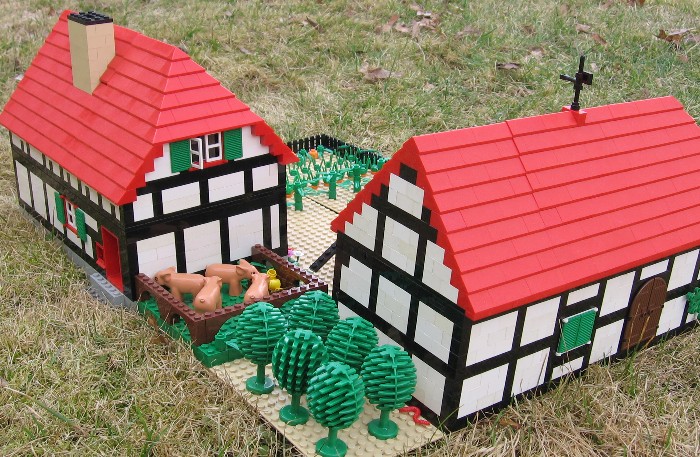
Behind the Lego barn are a few plum, apple and pear trees. On occasion, mother makes plum butter (pfaumenmuss). The apples are great for making apple strudel. Warm apple strudel is wonderful to eat on a cold day.
Pigs
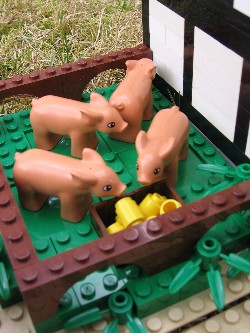
Here is a little sty where the family keeps some pigs. They are good for making sausages.
Which way to the Hoernersburg Lego Castle?
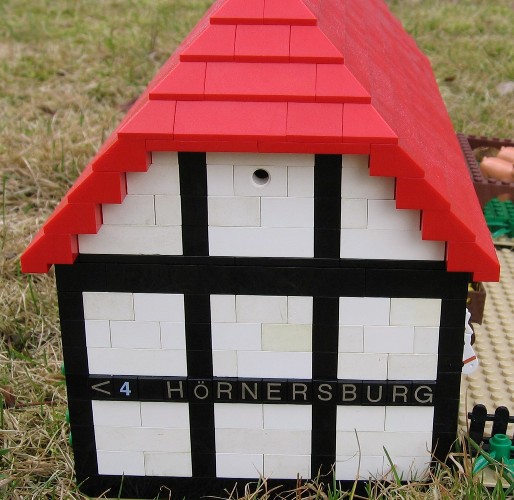
On the side of the Lego barn is a sign. Click on this image to see the direction and distance to the Hoernersburg Lego castle.
Frontier Culture Museum of Virginia
Here are some pictures of the German farm house and barn at the Frontier Culture Museum of Virginia.
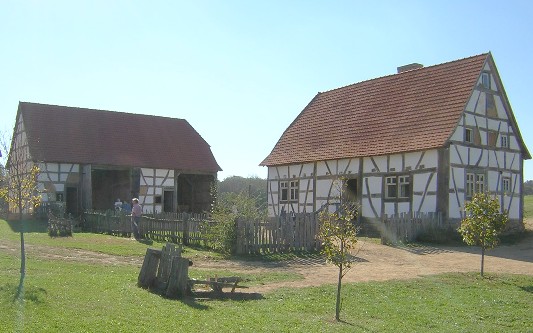
German farm house
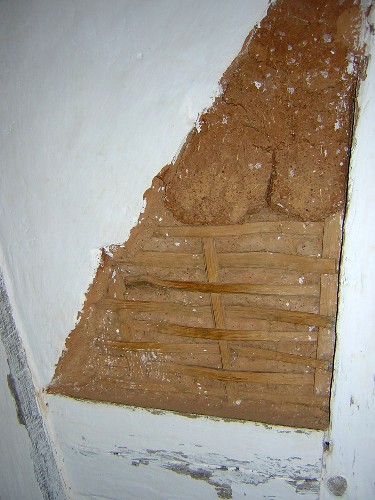
Example of wattle and daub construction
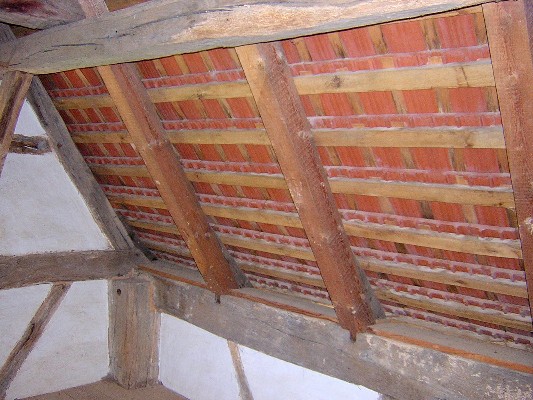
Tile roof from inside
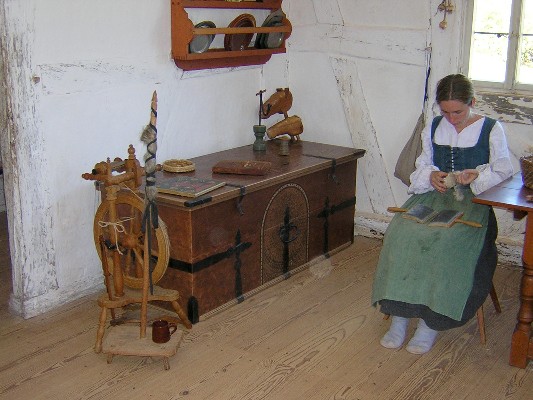
Living area (stube)
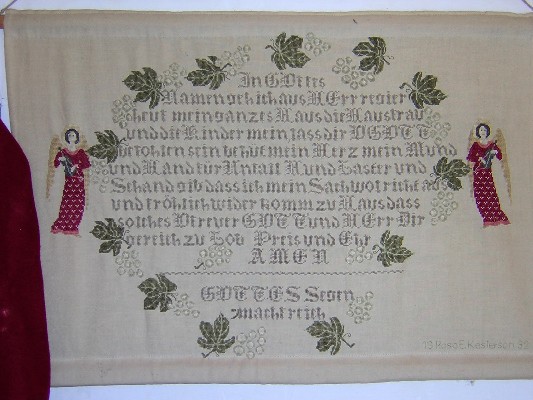
Embroidered prayer in the living area
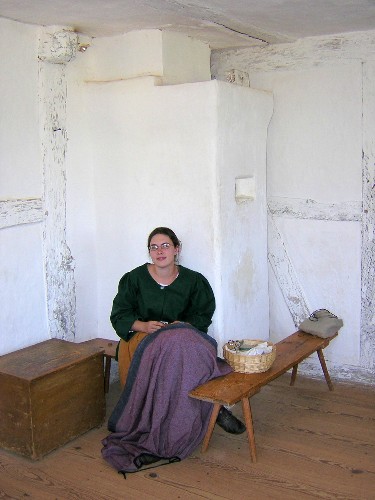
Stove (kachleofen) in the living area
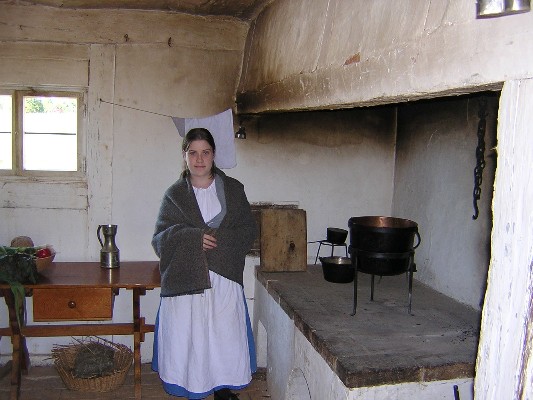
Kitchen (kuche)
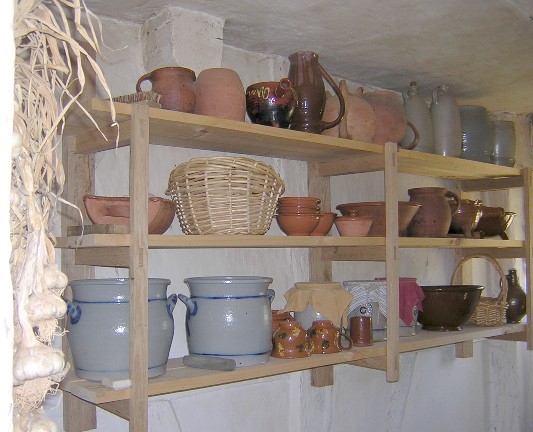
Shelves in the kitchen
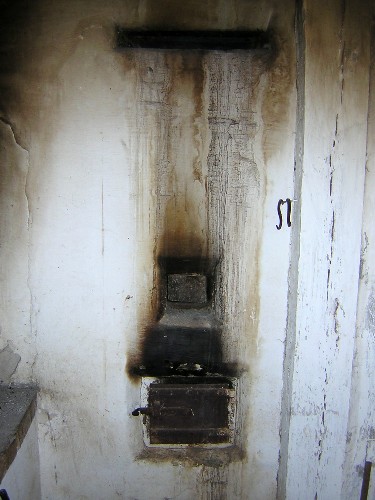
Stove fire door in the kitchen
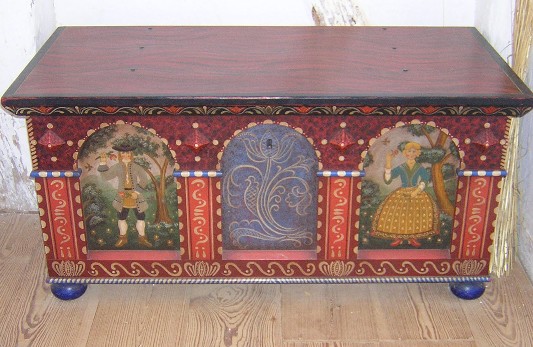
Chest in the bedroom
Back of barn
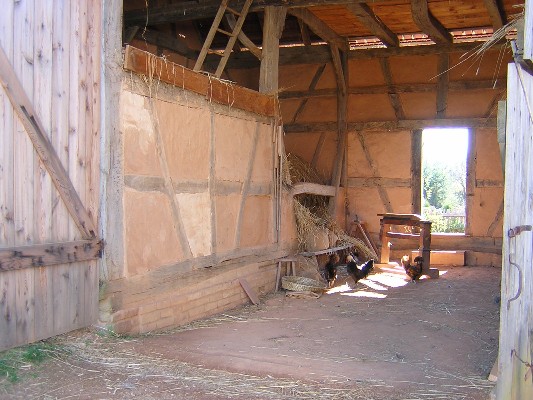
Barn threshing floor
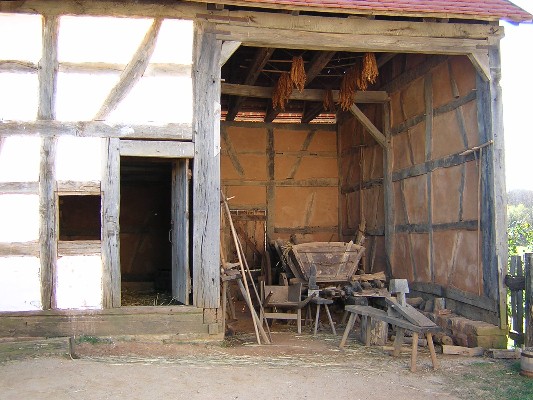
Barn wagon shed
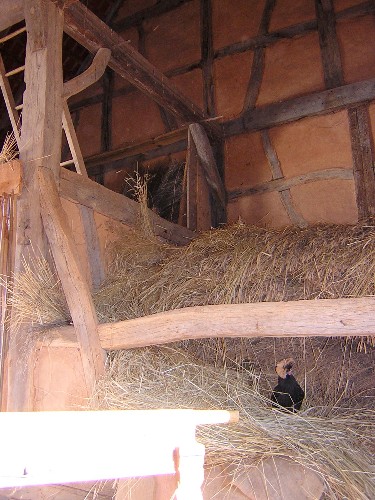
Barn hay store